Cleanrooms used for pharmaceutical manufacturing, sterile compounding, laboratories, healthcare, and other controlled applications depend on stable environmental conditions. But maintaining those conditions also requires a reliable way to know when something changes.
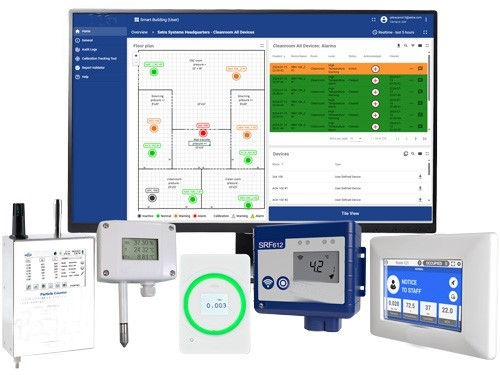
A clean room monitoring system continuously measures and records important environmental conditions within a controlled space. Depending on the application, the system may monitor differential pressure, temperature, relative humidity, airborne particles, airflow velocity, and door status.
By collecting environmental data continuously, a monitoring system can help personnel identify changes, review historical conditions, and respond when monitored parameters move outside established limits.
In This Article
This article explains what a clean room monitoring system is, how it works, and why continuous environmental monitoring is important. It covers key parameters including differential pressure, temperature, relative humidity, airborne particles, airflow velocity, and door status. We also compare continuous and manual monitoring, discuss common applications, explain what to consider when selecting a system, and introduce the AE Clean Room Monitor (CRM) as a monitoring solution for controlled environments.
How Does a Clean Room Monitoring System Work?
A clean room monitoring system typically uses sensors positioned at selected locations throughout the controlled environment.
These sensors collect measurements and send the information to a central monitoring platform. Personnel can then review current conditions and, depending on the system, access historical environmental data.
Monitoring systems can also use configured alarm thresholds. When a monitored parameter moves outside an established range, an alert can help personnel identify the change and investigate its cause.
This provides greater visibility into environmental conditions than relying only on measurements taken at individual points in time.
What Does a Clean Room Monitoring System Monitor?
The parameters that should be monitored depend on the cleanroom, its processes, facility requirements, and the monitoring strategy being used.
Common environmental parameters include:
Differential Pressure
Differential pressure is used to understand pressure relationships between controlled spaces.
Monitoring pressure continuously can help identify unexpected changes that may result from open doors, airflow changes, equipment conditions, or other factors affecting the controlled environment.
Temperature
Temperature monitoring provides an ongoing record of conditions within the cleanroom.
Continuous measurements can help personnel identify trends and determine when temperatures move outside established operating limits.
Relative Humidity
Relative humidity is another environmental condition that may need to be monitored.
Tracking humidity over time helps facilities understand changes within the controlled environment and provides historical information that can be reviewed when investigating environmental events.
Airborne Particles
Airborne particle monitoring can provide information about particulate levels within a controlled environment.
The specific approach to particle monitoring will depend on the cleanroom application, classification, processes, and facility monitoring requirements.
Airflow Velocity
Airflow plays an important role in controlled environments.
Monitoring airflow velocity can provide additional information about environmental performance and may help personnel identify changes requiring investigation.
Door Status
Opening doors between controlled areas can affect environmental conditions and pressure relationships.
Monitoring door status alongside other parameters can provide useful context when investigating pressure changes or alarm events.
Why Is Continuous Clean Room Monitoring Important?
Environmental conditions can change between scheduled inspections or manual measurements.
A continuous clean room monitoring system creates an ongoing record of these conditions, helping personnel understand what is happening within the controlled environment over time.
Continuous monitoring can help facilities:
- Identify environmental changes more quickly
- Review historical trends
- Investigate excursions and alarms
- Document environmental conditions
- Compare changes across multiple monitored parameters
- Improve visibility into controlled-space performance
Historical information can be especially useful when troubleshooting. Personnel can review when a change occurred and examine other monitored conditions around the same time.
For a more detailed discussion of environmental monitoring practices, see our Clean Room Environmental Monitoring article.
Clean Room Monitoring System vs. Manual Monitoring
Manual measurements may remain part of a facility’s environmental procedures, but continuous monitoring provides a different level of visibility.
For example, a manual differential-pressure reading might show that pressure is within the facility’s established range at the time of inspection.
A continuous monitoring system can show whether that pressure remained stable throughout the day or whether changes occurred between manual readings.
Rather than replacing every manual procedure, continuous monitoring can provide additional environmental information that helps personnel understand how a controlled space is performing over time.
Where Are Clean Room Monitoring Systems Used?
Clean room monitoring systems can be used in many types of controlled environments, including pharmaceutical manufacturing facilities, sterile compounding areas, healthcare facilities, laboratories, research facilities, controlled manufacturing environments, and mobile or modular cleanrooms.
The appropriate monitoring configuration depends on the facility, its processes, and the environmental parameters that need to be measured.
What Should You Look for in a Clean Room Monitoring System?
Before selecting a monitoring system, a facility should determine which environmental conditions need to be measured and where monitoring points should be located.
Important considerations may include:
- Sensor capabilities
- Alarm functionality
- Historical data and reporting
- Data retention
- Remote access
- Calibration requirements
- Integration with other facility systems
- Ability to expand to additional rooms or monitoring points
Scalability can be particularly important. A monitoring system that initially covers one controlled area may later need to accommodate additional rooms, sensors, or facilities.
The objective is to select a system that provides useful environmental information while remaining practical for personnel to operate and maintain.
AE Clean Room Monitor (CRM)
Aseptic Enclosures offers the AE Clean Room Monitor (CRM) for environmental monitoring in controlled spaces.
The AE CRM can monitor environmental parameters including differential pressure, temperature, humidity, particulate levels, airflow velocity, and door status.
The system provides centralized access to environmental information, allowing personnel to review current and historical conditions and respond to configured alarms.
For facilities evaluating a new monitoring solution or looking to improve visibility into existing controlled environments, the AE Clean Room Monitor can be configured around the requirements of the application.
Learn more about the AE Clean Room Monitor (CRM).
Better Visibility Into Your Controlled Environment
A clean room monitoring system does more than provide individual environmental measurements. Continuous monitoring creates an ongoing record of conditions within a controlled environment and can help personnel recognize when those conditions change.
The appropriate combination of sensors, monitoring locations, alarm thresholds, and reporting capabilities depends on the specific cleanroom and its operations.
If you are evaluating a monitoring solution for a new or existing controlled environment, contact Aseptic Enclosures to discuss your application and monitoring requirements.