CAI vs. CACI vs. BSC: Choosing the Right Primary Engineering Control
If your pharmacy or lab is planning a new compounding space — or updating an existing one for USP <797> and <800> compliance — one of the first decisions you’ll face is which primary engineering control (PEC) to build around. The three most common options are the compounding aseptic isolator (CAI), the compounding aseptic containment isolator (CACI), and the biological safety cabinet (BSC). They sound similar, but they’re built for different jobs, and choosing the wrong one can mean failing an inspection or, worse, exposing staff to hazardous drugs.
Here’s how they actually differ.
Quick Comparison
| CAI | CACI | BSC | |
|---|---|---|---|
| Primary purpose | Product protection (sterile, non-hazardous compounding) | Product + personnel protection (sterile, hazardous compounding) | Personnel + environmental protection (hazardous compounding, sterile or nonsterile) |
| Pressure | Positive pressure | Negative pressure | Negative pressure (Class II) |
| Hazardous drugs? | No, not designed for HD compounding | Yes — designed specifically for HD compounding | Yes |
| Typical use | IV infusions, injectables, non-hazardous CSPs | Chemotherapy and other hazardous sterile preparations | Hazardous drug handling, sterile or nonsterile, depending on class/type |
| USP <800> role | Not used for hazardous drugs | Recognized C-PEC for sterile HD compounding | Recognized C-PEC for sterile or nonsterile HD compounding (Class II) |
Compounding Aseptic Isolator (CAI)
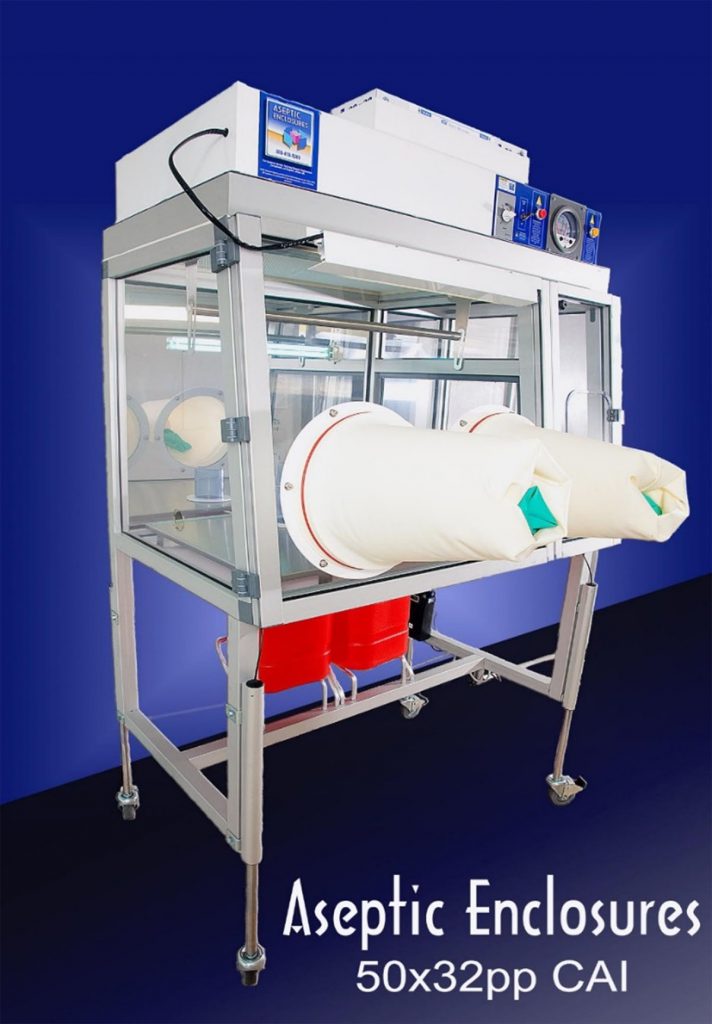
A CAI creates a sealed, positive-pressure environment with unidirectional HEPA-filtered airflow. The positive pressure pushes air out of the unit whenever it’s opened, which keeps room-level contaminants from entering — ideal for protecting a sterile, non-hazardous preparation.
Best for:
- IV infusions and injectables
- Non-hazardous sterile compounding (Category 1 and 2 CSPs)
- Hospital and outsourcing facility (503A/503B) pharmacies without a hazardous drug compounding need
Important limit: Because a CAI is positively pressurized, it’s not appropriate for hazardous drug compounding — any leak pushes air (and potentially hazardous particulate) outward into the room, the opposite of what you want when handling hazardous drugs.
Compounding Aseptic Containment Isolator (CACI)
A CACI looks similar to a CAI but flips the pressure relationship: it runs at negative pressure, so any leak pulls room air into the unit rather than pushing isolator air out. That containment behavior is what makes it suitable for hazardous drug work while still maintaining the sterile, ISO-classified environment needed for compounding.
Best for:
- Chemotherapy and other hazardous sterile preparations
- Facilities that need a single device covering both sterility and operator protection
- USP <800> Category 1/2 hazardous drug CSPs
Important limit: A CACI is a sterile compounding device — it’s not interchangeable with a BSC if your facility’s workflow includes nonsterile hazardous drug handling.
Biological Safety Cabinet (BSC)
A BSC is a ventilated cabinet, most commonly used in a Class II configuration (Type A2 or Type B2), built primarily around personnel and environmental protection. Vertical laminar airflow creates a protective barrier at the work opening while HEPA filtration cleans both supply and exhaust air.
Best for:
- Hazardous drug handling, sterile or nonsterile
- Facilities needing flexibility across both sterile and nonsterile HD workflows
- Research and laboratory settings beyond pharmacy compounding
Type A2 vs. Type B2: Type A2 cabinets recirculate a portion of filtered air back into the room; Type B2 cabinets exhaust all air externally. Your choice depends on your facility’s HVAC design, the specific drugs handled, and your hazard assessment.
So Which One Do You Need?
A simplified way to think about it:
- Sterile, non-hazardous compounding only? → CAI
- Sterile, hazardous compounding (e.g., chemotherapy)? → CACI
- Hazardous drug handling that includes nonsterile compounding, or do you need cabinet flexibility across workflows? → BSC
In practice, many facilities run more than one type of PEC side-by-side to cover different parts of their compounding workflow — for example, a CACI for sterile hazardous CSPs and a BSC for nonsterile hazardous drug handling in the same buffer room.
Frequently Asked Questions
Is a BSC required for USP <800> compliance? USP <800> requires a containment primary engineering control (C-PEC) for hazardous drug compounding — a BSC is one recognized option, but a CACI can also satisfy this requirement for sterile hazardous compounding. The right choice depends on your specific workflow.
Can I use a CAI for hazardous drugs? No. A CAI’s positive-pressure design protects the product but not the operator or environment, which is why it’s not appropriate for hazardous drug compounding under USP <800>.
What’s the difference between Class I and Class II BSCs? Class I BSCs protect personnel and the environment only — not the product. Class II BSCs protect personnel, the environment, and the product, making them suitable for sterile compounding work as well.
Do I need a custom configuration, or does a standard unit work? It depends on your facility’s space, HVAC capacity, and the specific hazardous drugs you handle. A facility assessment is the fastest way to know for sure.
Not sure which fits your facility?
Our team has specified primary engineering controls for hospital pharmacies, 503A/503B outsourcing facilities, and research labs for over three decades. Contact us for a facility consultation →